

For many business owners, their company represents their life’s work and their largest financial asset. Yet when it comes time to plan an exit, few owners have the right strategies in place to maximize value, retain key talent, and ensure a smooth transition. One powerful, often overlooked tool that can help accomplish all three of these objectives is a Non-Qualified Deferred Compensation (NQDC) Plan.
This article defines NQDCs, highlights the importance of this strategy to a business owner’s exit plan, and outlines the elements of an effective NQDC Plan.
What Is a Non-Qualified Deferred Compensation Plan (NQDC) ?
A Non-Qualified Deferred Compensation (NQDC) Plan is an agreement between a company and an employee, or key executive, that allows a portion of the employee’s compensation to be deferred to a future date. This agreement is often tied to specific events, such as retirement, the sale of the business, and/or important performance milestones.
Unlike qualified plans, such as 401(k)s or pension plans, NQDCs:
- Are not subject to IRS contribution limits;
- Can be offered selectively to employees; and
- Provide flexibility in design, payout timing, and/or performance conditions.
These plans typically rely on a written agreement that defines how and when the deferred compensation will be paid, and under what conditions the participant will forfeit or receive benefits.
Importance of NQDC Plans in Exit Planning
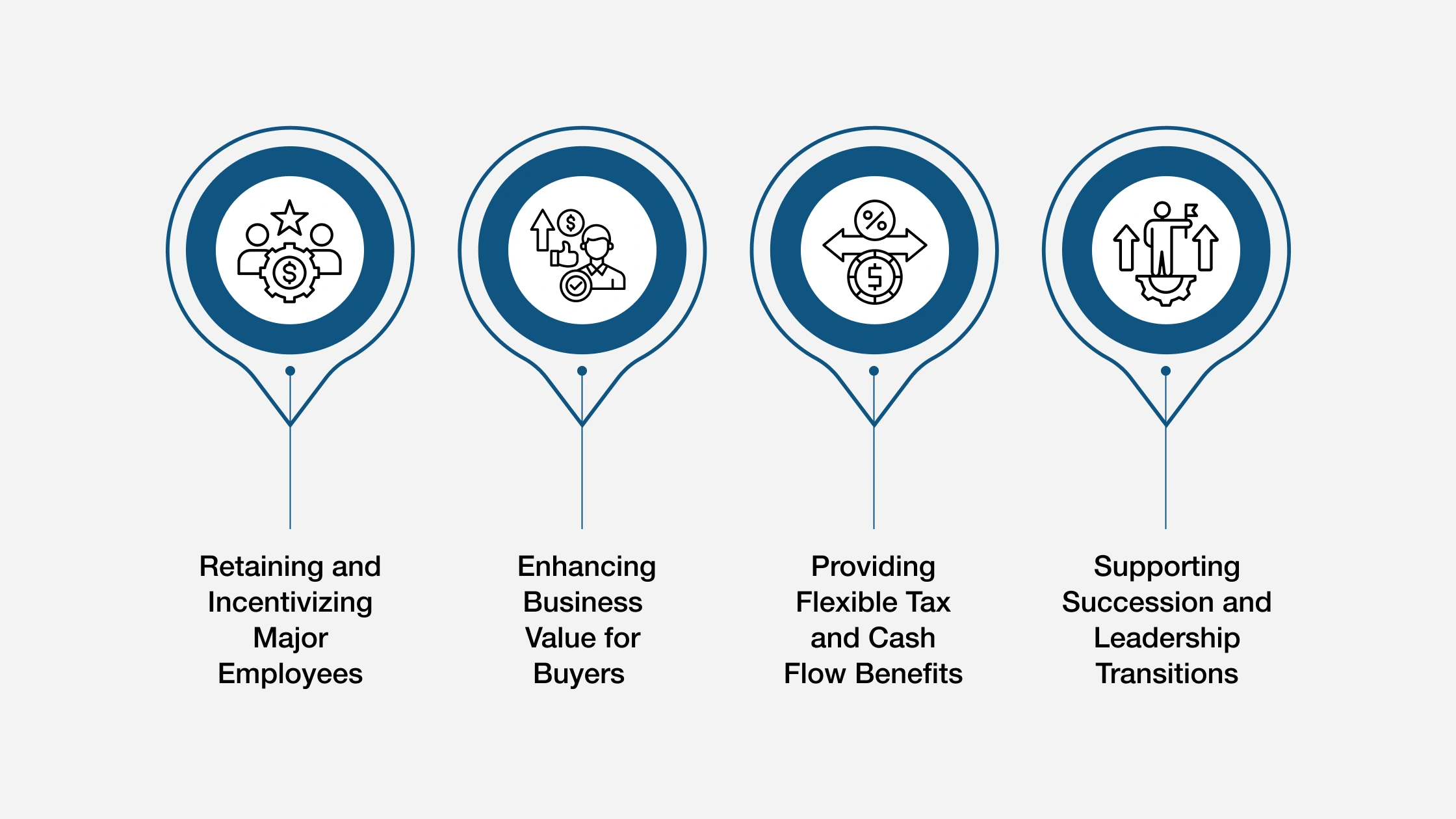
There are four reasons an NQDC plan matters in exit planning:
1. Retaining and Incentivizing Major Employees
The success and market value of most privately held companies depend heavily on the knowledge and commitment of their managers and executives. If those individuals leave before or during a transition, the company’s value could plummet.
An NQDC plan can serve as a “golden handcuff” that rewards longevity and performance. By tying deferred benefits to company milestones or continued service until a liquidity event, owners can incentivize primary leaders to stay through the transition and support a successful exit.
For example, suppose a construction company owner establishes an NQDC plan for two senior project managers that vests upon the sale of the company. It is very likely that both employees will be motivated to help the business grow and remain profitable, ensuring a smoother and more valuable sale.
2. Enhancing Business Value for Buyers
A well-structured NQDC plan can increase buyer confidence and overall business valuation. When prospective buyers see that critical personnel are financially motivated to remain with the company post-acquisition, the perceived transition risk drops significantly.
This continuity can help justify a higher multiple and smoother ownership transfer, especially when the owner’s relationships or expertise are central to the business’s success.
3. Providing Flexible Tax and Cash Flow Benefits
NQDCs can also help with cash flow management and tax deferral for both the company and its participants. For instance:
- The employer can defer paying out compensation until the business has more liquidity, for example, after a sale.
- The employee or executive can defer income taxes until the funds are received, ideally at a time when they may be in a lower tax bracket.
This flexibility helps align incentives and better manage the financial burden of the exit process.
4. Supporting Succession and Leadership Transitions
For owners planning an internal transfer to family members, partners, or managers, NQDC plans can serve as part of a succession incentive system by ensuring the next generation of leaders is rewarded for carrying the business forward.
NQDCs can, moreover, complement other exit planning vehicles such as:
- Buy-sell agreements;
- Employee Stock Ownership Plans (ESOPs;)
- Phantom stock or stock appreciation rights (SARs.)
When used together, these tools create a comprehensive strategy for continuity, liquidity, and talent retention.
Designing an Effective Non-Qualified Deferred Compensation (NQDC)Plan
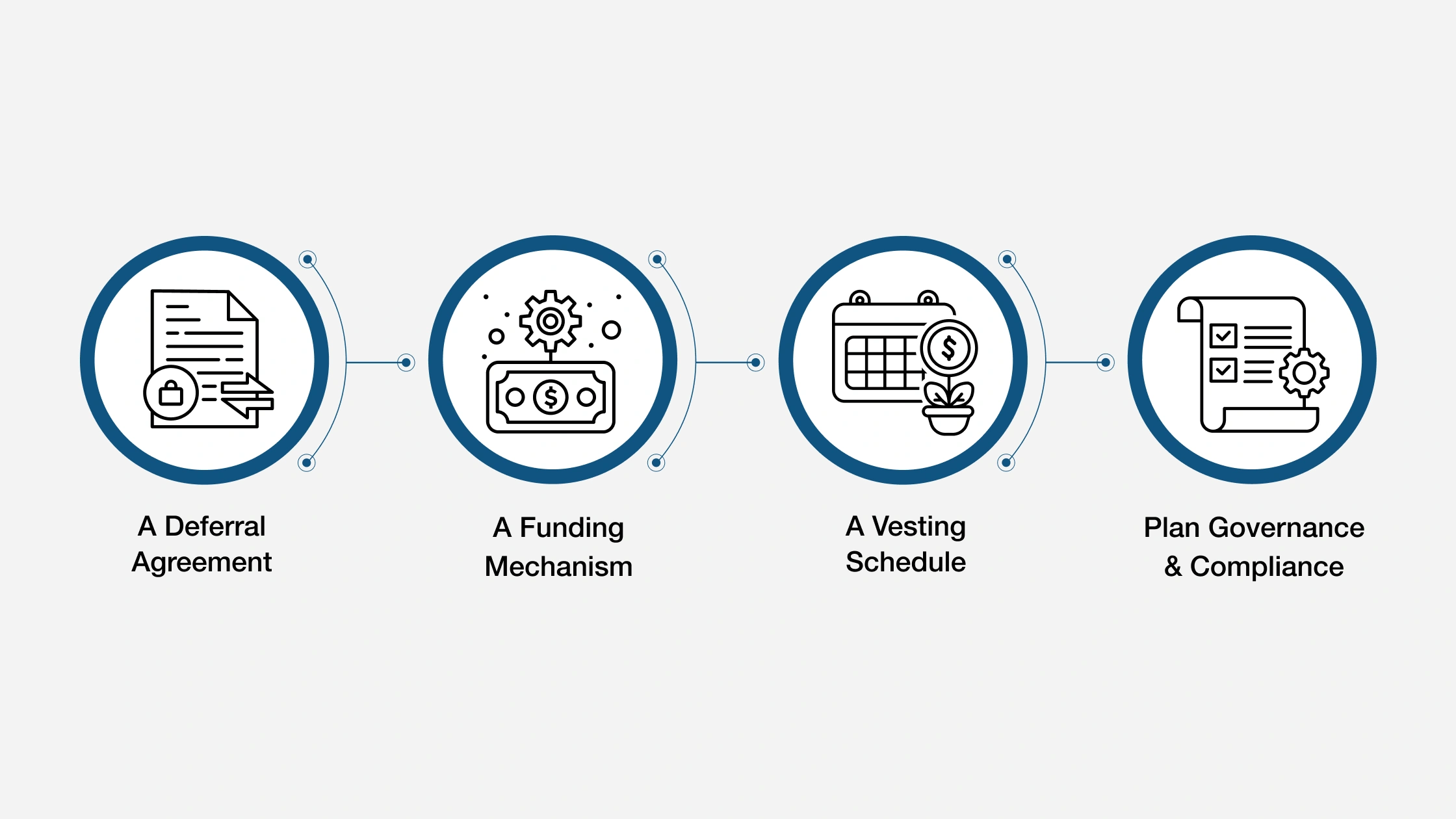
Essential elements of an effective Non-Qualified Deferred Compensation plan include:
- A Deferral Agreement: This specifies the amount, timing, and triggering events for the payout.
- A Funding Mechanism: Plans can be informally funded, using corporate-owned life insurance or investments, or remain unfunded to preserve flexibility.
- A Vesting Schedule: This encourages retention by tying benefits to continued employment or the achievement of certain exit milestones.
- Plan Governance & Compliance: NQDCs must comply with IRS Section 409A, which governs the timing and structure of deferred compensation.
CBECs are encouraged to work with financial advisors, tax professionals, and legal counsel to ensure compliance and alignment with broader exit goals.
Conclusion
A Non-Qualified Deferred Compensation Plan is far more than an executive perk. It’s a strategic exit planning method that supports continuity, rewards performance, and enhances enterprise value. By integrating NQDCs into an overall succession or sale strategy, a business owner can:
- Retain key employees;
- Secure higher valuations;
- Smooth ownership transitions; and
- Manage tax and liquidity considerations effectively.
For any business owner thinking about the future, whether that’s five years or fifteen years away, NQDCs deserve a serious look as part of their comprehensive exit planning strategy.
Strengthen Your Exit-Planning Expertise with CBEC® Certification

The Certified Business Exit Consultant® (CBEC®) designation equips advisors with the practical frameworks, deal insights, and succession-planning knowledge needed to guide owners through complex transitions, including the use of strategies like NQDC plans.
As a CBEC® professional, you gain:
- Advanced Exit-Planning Knowledge: Apply methods that improve continuity, valuation, and deal readiness.
- Hands-On Practical Training: Learn real-world techniques for structuring incentive plans, navigating tax considerations, and supporting ownership transitions.
- Professional Credibility: Earn a respected certification backed by the International Exit Planning Association (IEPA).
- Stronger Advisory Revenue: Build deeper, longer-term relationships with business-owner clients.
If you want to elevate your advisory impact and help business owners exit with clarity and confidence, the CBEC® certification provides the expertise to make it happen.
Contact the International Exit Planning Association (IEPA) today to begin your CBEC® certification journey.
About the Author
James J. Talerico, Jr. CMC ® CBEC ® is an award-winning author, blogger, speaker, and a nationally recognized small to mid-sized (SMB) business expert, with outstanding business consulting, succession planning, value acceleration, and exit planning credentials. He is the owner of Greater Prairie Business Consulting, Inc. (www.greaterprairiebusinessconsulting.com) located in Irving, Texas and has helped thousands of business owners throughout the US and in Canada maximize their business performance and exits for more than 30 years. Jim currently sits on The IEPA’s Education Committee.